What is Tajweed?
Tajweed means improving Quran recitation by applying correct pronunciation rules, articulation points, and recitation techniques.
Makhraj
Pronunciation
Fluency
Accuracy
Noor Ul Haya Quran Academy | Learn Quran Online in UK, USA & Canada

Many Muslims read the Quran every day yet worry that their pronunciation is wrong. Small mistakes in letters, vowels and pauses can change the meaning of a word, and wrong habits grow harder to correct the longer they stay. Our Quran classes with Tajweed fix those mistakes with a qualified male or female one-to-one teacher, so you learn to recite every verse clearly, correctly and with confidence, at times that suit the UK, USA and Canada.
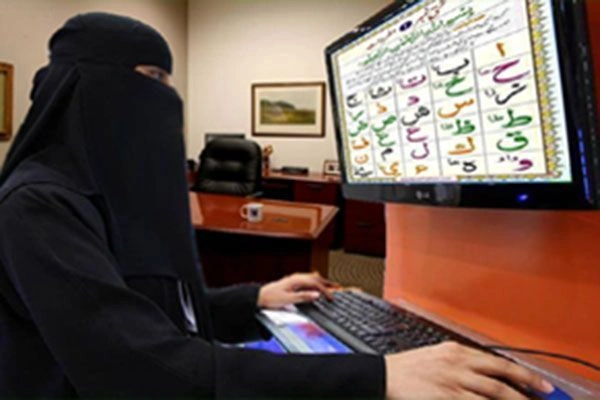
Tajweed means improving Quran recitation by applying correct pronunciation rules, articulation points, and recitation techniques.
Learning Tajweed is not about reading faster or sounding impressive. It is about reading the Quran the way it was revealed — every letter from its correct place, every vowel given its full value, and every pause made where the meaning asks for it. When the rules are in place, your recitation becomes clearer to the listener and easier for you to follow, because you are no longer guessing at sounds. Many students in our Quran classes with Tajweed tell us that once their Makhraj is corrected, verses they have read for years suddenly feel new, and memorised Surahs become easier to keep, because you now store the words with their correct sounds.
Our Quran classes with Tajweed teach the rules in small steps, one rule at a time, with practice on real verses — never as a long list to memorise.
In a one-to-one online class your teacher listens to every verse you read and corrects you straight away, while the mistake is still fresh. A typical lesson follows the same steady pattern: you revise yesterday's passage, your teacher introduces one new rule with a few examples, you read the new verses aloud several times, and the last minutes are spent on the lines you found hardest. If a letter keeps slipping, your teacher will give you a short daily exercise for that one letter only, rather than moving on and letting the mistake settle. Students who read a little every day between lessons progress far quicker than those who only read in class, so in our Quran classes with Tajweed your teacher will set a small daily reading target that fits your routine.
Our Quran classes with Tajweed help you recite the Quran correctly, beautifully, and confidently with proper pronunciation. After Tajweed, many students go on to Quran memorisation (Hifz), the Ten Qirat course, or an Ijazah.
Yes, applying Tajweed rules is essential for correct Quran recitation.
Most students in our Quran classes with Tajweed learn the basic rules in a few months with regular practice.
Yes, online classes are available for all age groups.
No, beginners can start without prior Arabic knowledge.
Yes. Most students in our Quran classes with Tajweed already read fluently. The classes focus on correcting the small pronunciation habits that have built up over the years, so your existing reading becomes correct and confident.
Book your free trial lesson today — no payment needed.
Continue your learning: Qurani Qaida Course · Quran Memorization (Hifz) Course · All Courses · Fees